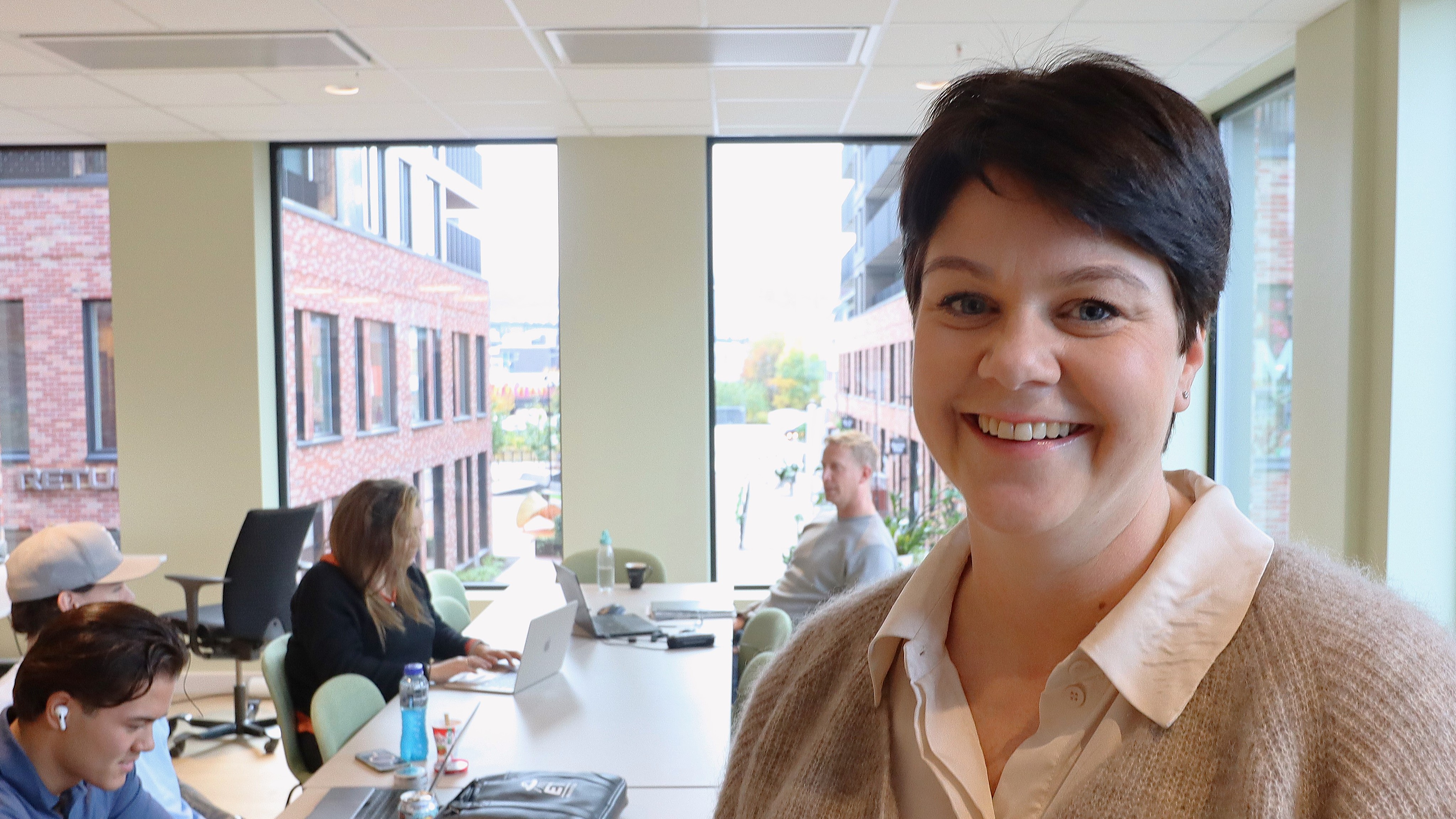




NILU's Tomas Nordlander emphasizes that artificial intelligence should be part of the sustainability solution – not part of the problem. Photo: Stefan Borup
At Sustainability Day, artificial intelligence was highlighted as a powerful engine for sustainability – provided it is used with awareness and responsibility.
Artificial intelligence has the potential to become one of our most important drivers for sustainability. But for the technology to contribute to positive gains – and not cost us more than it provides – it must be kept in check.
During Sustainability Day, organized by Kunnskapsbyen and the law firm Halvorsen & Co, the theme was how we can succeed with sustainable transition in practice. Participants from business, public sector, and research communities discussed how new tools, collaboration, and technology can contribute to change.
"We must take responsibility"
NILU's Managing Director, Tomas Nordlander, reminded the audience that artificial intelligence is not an invisible force. It is both physical and resource-intensive.
"AI lives in enormous data centers that require energy and resources we rarely consider. But the technology itself is not to blame for anything – it is we who must take responsibility," said Nordlander.
He challenged the participants to ask the question:
"Are we willing to steer development so that AI becomes part of the solution – and not the problem?"
From technology to sustainability
During the group sessions, participants elaborated on this message. AI and sustainability was one of the main themes, and the discussions revealed both enthusiasm and thoughtful consideration.
AI can provide time savings, better decision-making foundations, and smarter resource utilization in sustainability efforts. However, it requires ethical awareness, competence, and robust governance frameworks. Risks related to privacy, bias, and the loss of human judgment were clearly addressed.
Drive for Action in the Region
The engagement during the day confirmed a strong will to act across disciplines and sectors. Susanne Klevar, Coca-Cola's Head of Sustainability, pointed out that they will not achieve their growth targets without simultaneously achieving their sustainability goals.
For Kunnskapsbyen Lillestrøm, this is central: creating meeting places where knowledge is shared, challenges are solved, and responsible technology development is an integral part of the sustainability strategy.
The input from the group sessions is now being taken forward in Kunnskapsbyen's own sustainability work – with the goal of turning words into concrete action. AI can be an engine for sustainability, but it must be managed well.