

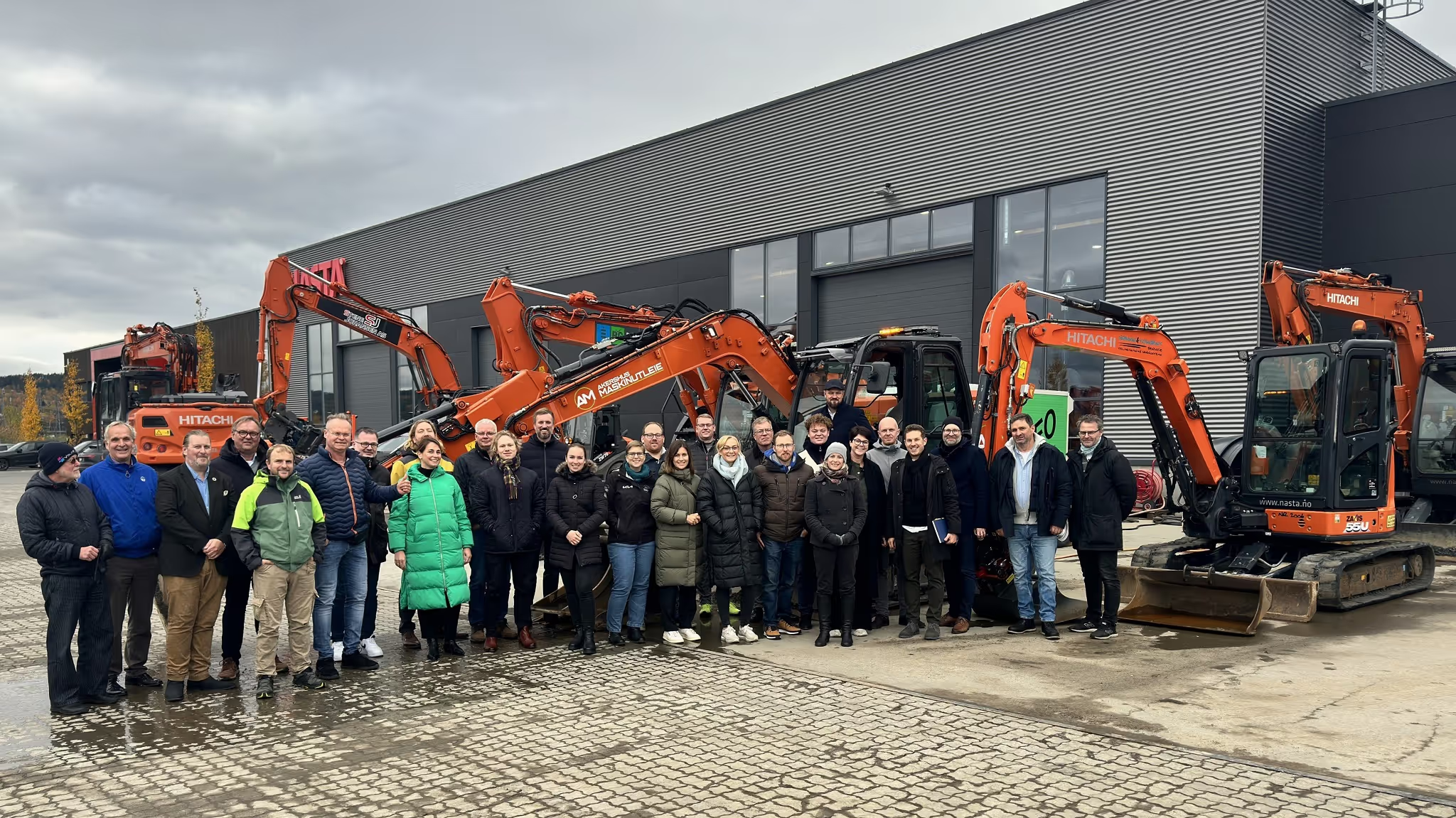
A large German business delegation was impressed by Romerike's efforts in emission reduction. At Nasta in Kjeller, the Germans got to see – and try – emission-free construction machinery.
23 German companies paid a two-day visit to Romerike to gain insight into how we are working to reduce emissions from road transport and construction operations.
Anette Gangnæs from Kunnskapsbyen, who leads the Green Visits program, hosted the German business delegation. She received top marks for the visit's arrangements. Delegation leader Jurek Schwekendiek was full of praise after the visit. He also couldn't praise the Norwegian companies and their hospitality enough.
Among other things, the German delegates got to test-drive emission-free construction machinery at Nasta in Kjeller. This part of the visit was conducted under the expert guidance of Sjur Wethal, Senior Advisor for Climate and Customer Solutions at Nasta. He also provided insight into the practical experience the company has gained through several years of selling and renting emission-free construction machinery.
There, they also received a briefing on the EU project Cleancon and Kunnskapsbyen's work to cut emissions at construction sites, presented by project manager Jon Eriksen. The use of public procurement and piloting are important tools for accelerating the adoption of emission-free construction sites, especially in an initial phase.
Romerike's versatile battery industry
The companies in the Romerike Battery Network were also key contributors during the business visit. Jon Emil Furuseth, Country Manager for Stena Recycling Norway, gave the German delegation a tour of the facility for reuse and recycling of used electric vehicle batteries at Ausenfjellet. The company aims to be a leading European player in the recycling and reuse of high-power batteries typically found in electric cars.
Trond Skaufel, CEO of Nordic Booster, showcased their mobile fast chargers with built-in batteries. These mobile charging containers make it possible to offer high-power charging for electric construction machinery, even where the local grid has low capacity – or is entirely absent.
Thor Christian Tuv, CEO of Fusen Solar, impressed the audience when he spoke in fluent German about solar energy and how we work with it in Norway.
Business Developer Olav Haga at Akershus Energi briefed them on the company's work with grid integration and charging infrastructure. Reduced transport emissions will require electric trucks and buses. Posten Bring is already in the process of building powerful charging stations for heavy vehicles across the country.
Would welcome a return visit from Romerike
“These have been very informative business visits for us, providing a lot of concrete information on how Norwegian companies are working with emission-free transition,” says project manager Jurek Schwekendiek at the E-Mobility Coordination Centre Schleswig-Holstein.
He would not mind hosting a similar German business visit for companies from Romerike.
“We would gladly welcome a business delegation from you to show how companies in Schleswig-Holstein are working with this challenge,” he says.