

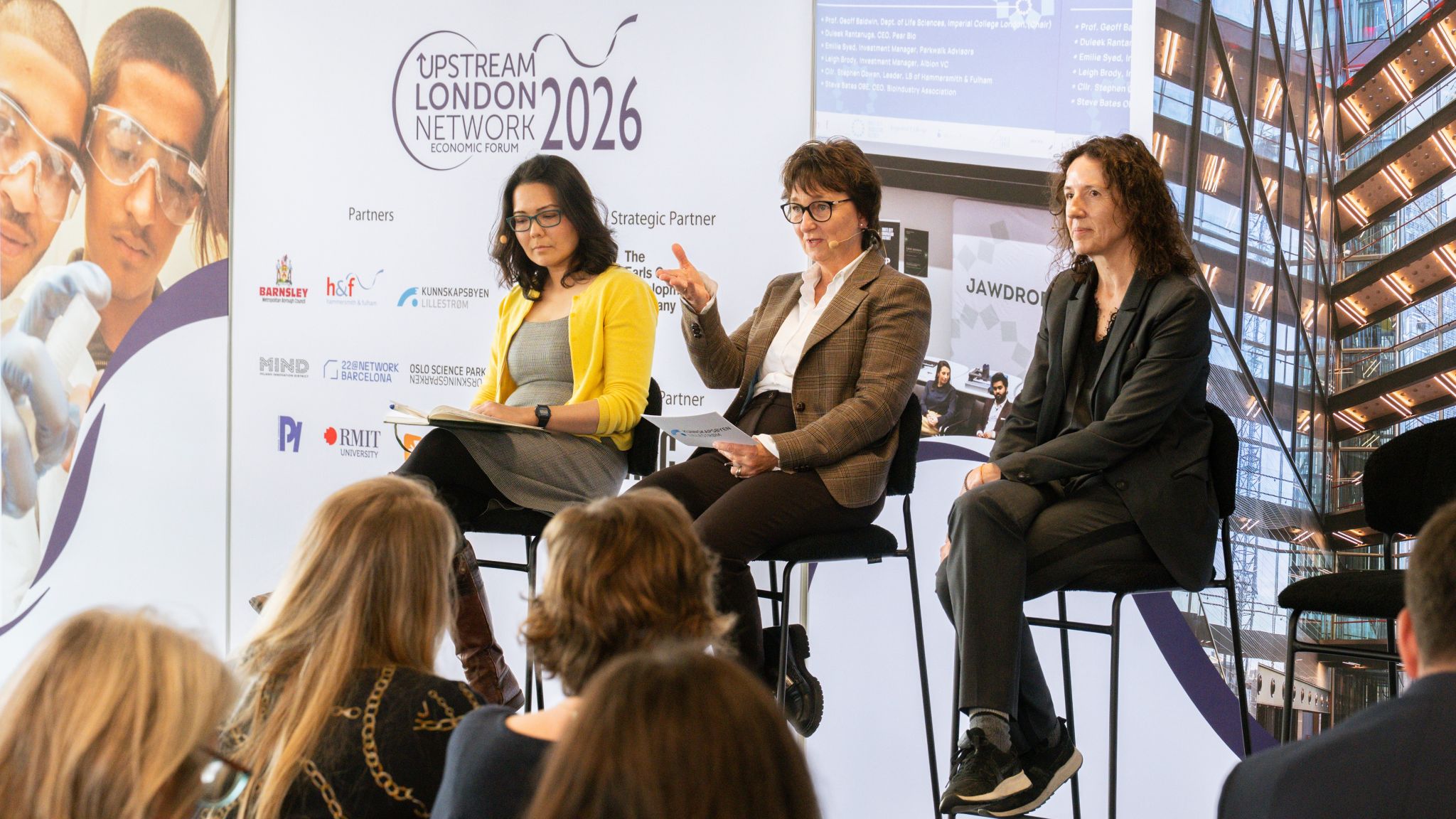
Prema Gurunathan, Upstream London, Inger-Lise M. Nøstvik, Kunnskapsbyen/NODE60, and Isabel Ruiz Lopez, 22@Network Barcelona, shared their local experiences. Photo: Upstream
Kunnskapsbyen represents NODE60 in the shaping of a new international strategic framework for the development of innovation districts.
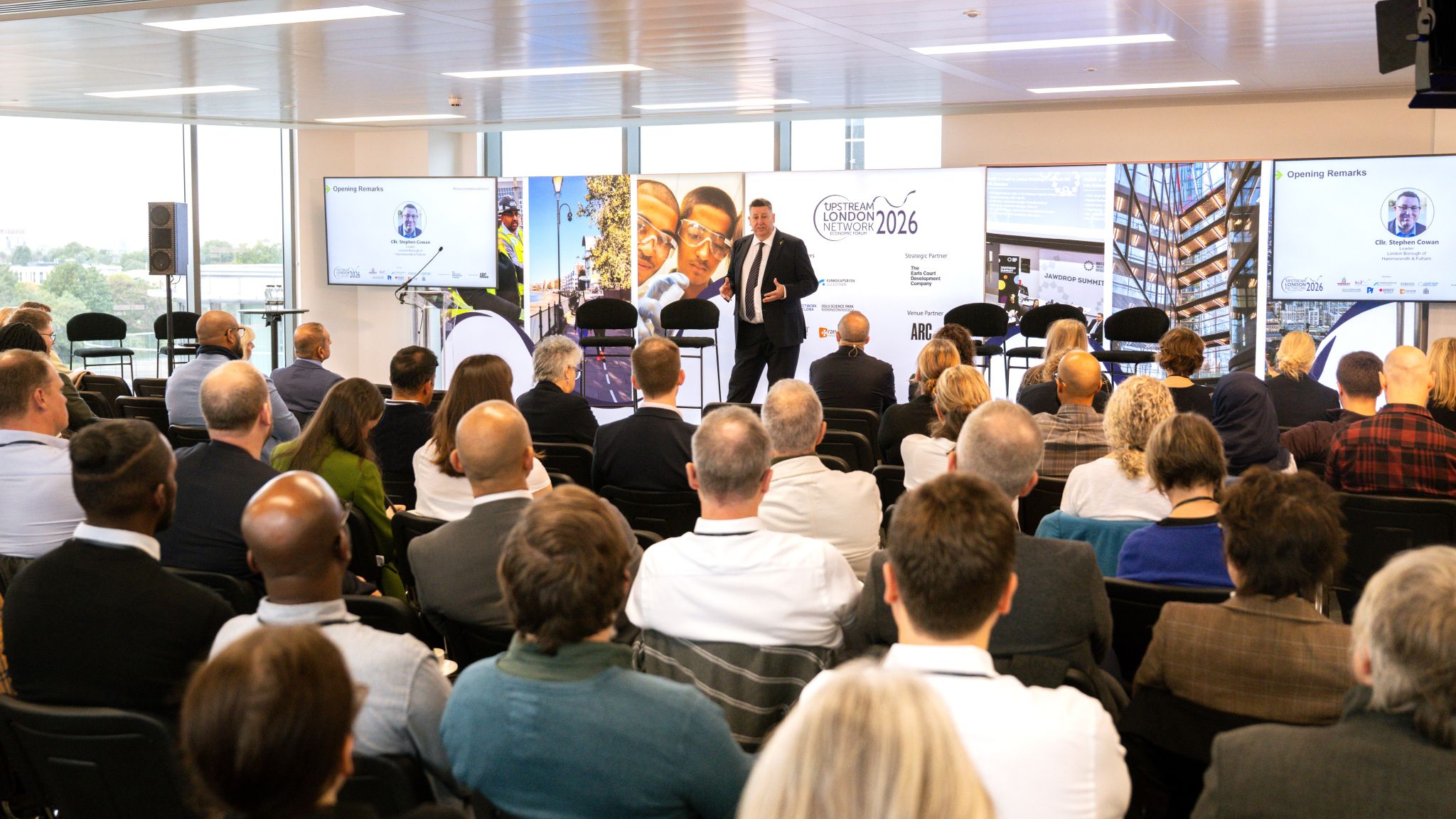
The first chapter of the strategic framework was presented at the Upstream London Network Economic Forum on October 12th and 13th, during an international gathering for innovation districts.
The launch brought together leaders from several of Europe's innovation districts, along with representatives from politics, research, and business. Kunnskapsbyen's CEO, Inger-Lise M. Nøstvik, contributed to the professional program alongside representatives from 22@Barcelona, Milano Innovation District, and Oslo Science Park, among others.
The "Upstream London Blueprint" is both a policy tool and a growth strategy. The document outlines a practical approach for how innovation arenas with widely different starting points can create shared value through place-based, innovation-led, and inclusive growth.
The focus is on innovation-led growth through inclusion and the triple helix model, demonstrating how local innovation policy can foster competitive, resilient, and inclusive economic development.
Democratic innovation culture
The framework itself is based on a fundamentally democratic set of values and is built upon five main elements:
- Triple helix – education, business, and the public sector
- Municipal involvement in place-specific entrepreneurship
- Support systems for startups and scaleups
- Inclusive interventions that safeguard the interests of the local community
- Focus on investment attractiveness
The "Upstream London Blueprint" is intended to serve as a transferable methodology for developing innovation districts, with geographical ecosystems that promote startups, attract technology companies, and create local jobs and opportunities.
Innovation and urban development must be viewed in context
A key point is that innovation districts are not just about research, technology, and entrepreneurship. They are also about developing places where people, businesses, and centers of expertise meet, collaborate, and create value together.
This is particularly relevant for NODE60's node-based model, with Ahus, Lillestrøm, and Kjeller as central hubs. If the region's collective innovation power is to be unleashed, the development of mobility, infrastructure, meeting places, and attractive urban and business areas must be viewed in conjunction with research, education, and business development.
International cooperation that creates opportunities
"For Kunnskapsbyen and NODE60, international cooperation is more than just a forum for exchanging experiences. It is about developing relationships that, over time, can provide concrete opportunities for our partners," says NODE60 project manager Even Sand.
Through collaboration with international innovation hubs, we gain access to new perspectives, expertise, and networks, while simultaneously highlighting Romerike's strengths in energy and technology, health and pharmaceuticals, as well as security and emergency preparedness.
The ambition is to further develop these relationships into concrete collaborative projects, connections between professional communities, and new opportunities for innovation and value creation across national borders.
NODE60 aims not only to learn from international environments but also to contribute the expertise and experience found within our own partner network.
Boundless partnership
We will continue to work in collaboration with our colleagues in The Cooperative Growth Partnership, an international partnership between research and innovation districts. The goal is to develop a comprehensive strategic framework for the development of innovation districts that can help other regions and locations design their own growth strategies. The Cooperative Growth Partnership includes:
- 22@Network, Barcelona, Spain
- Barnsley Council Place Services, UK
- Buenos Aires Innovation Park, Argentina
- Milano Innovation District, Italy
- NODE60, Lillestrøm, Norway
- Oslo Science Park, Norway
- RMIT University, Melbourne, Australia
- Rzeszów Science and Technology Park, Poland
- White City Innovation District, London, UK