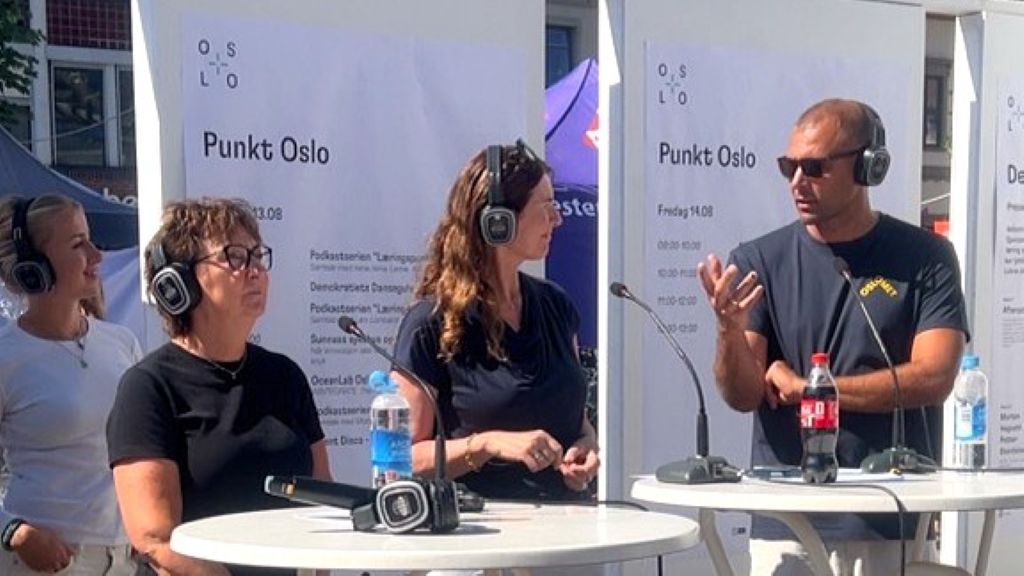
Inger-Lise M. Nøstvik of Kunnskapsbyen and Siri Berggreen of Romerike Sparebank represented NODE60. They are calling for less talk and more action in the innovation districts. To the right is moderator Carl Thodesen from OsloMet. In the background to the left, Staaltro CEO Fredrikke Rusten can be seen. Both photos: Marit Thomas
New innovation districts are popping up constantly. Are they actually useful, or have they just become a trendy buzzword without any real substance?
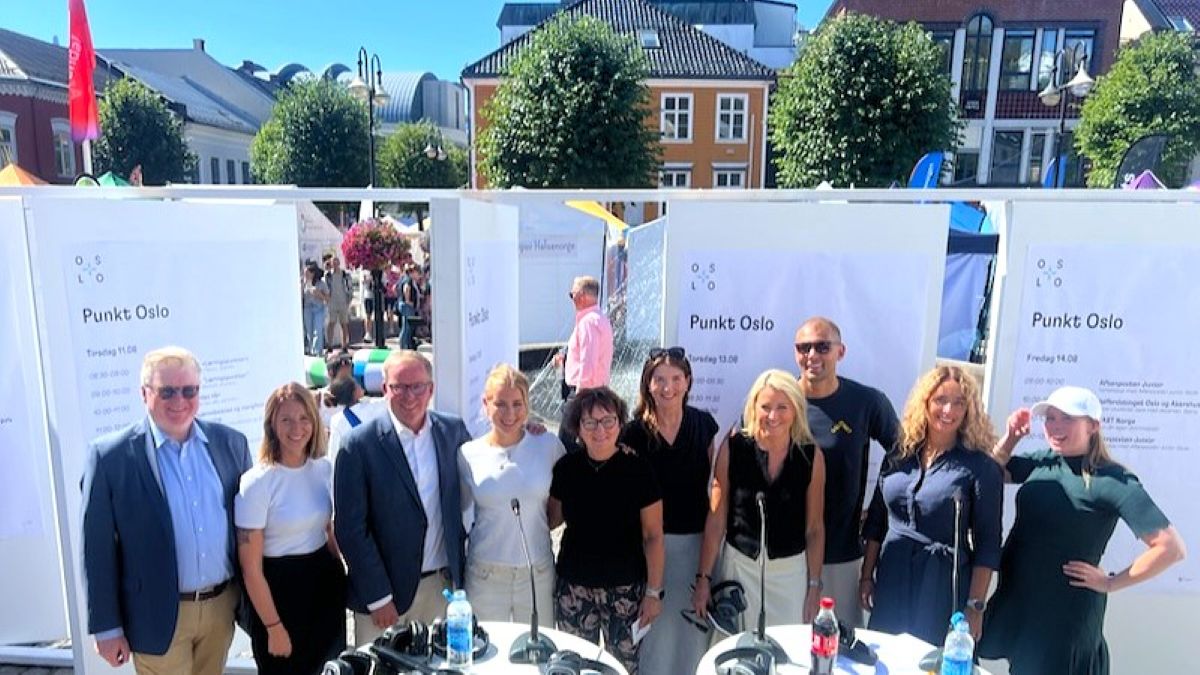
That was the topic of discussion when OsloMet and Punkt Oslo hosted a debate on Tuesday, August 11, at Torvet in Arendal. Romerike was well represented by CEO Siri Berggreen of Romerike Sparebank and Managing Director Inger-Lise Melby Nøstvik of Kunnskapsbyen.
CEO Håkon Haugli of Innovation Norway also participated in the debate, which was moderated by Pro-Rector Carl Thodesen of OsloMet.
Need to get out of the starting blocks
The City of Oslo and Akershus County Municipality have each helped establish three innovation districts. The municipalities of Bergen and Trondheim have established one each.
But what came out of the debate? Are innovation districts just hype, or do they form a real foundation for innovation and job creation?
The principles behind them are not new. The innovation district model is largely built on the same methodology that Kunnskapsbyen has successfully used as its guiding principle for over 25 years.
The panel was unanimous that innovation districts have a reason to exist. However, they called for more concrete action, not just talk.
Steel-strong belief in innovation
The newcomer Staaltro was highlighted as a good example of what can come out of a strong innovation environment.
The startup was established in Oslo in 2024 to address the significant frustration surrounding the reuse of materials in the construction industry. Contractors want to buy reused materials in the same way they buy new ones. However, friction in the value chain makes reuse inefficient in practice.
Today, property developers who want to reduce emissions must manage the entire reuse process themselves: careful dismantling in collaboration with a demolition contractor, temporary storage, transport, quality control, documentation, and reassembly in new projects.
Staaltro can handle this. If you need to source reused materials, the startup can supply them through the wholesale channel—just like buying new goods.