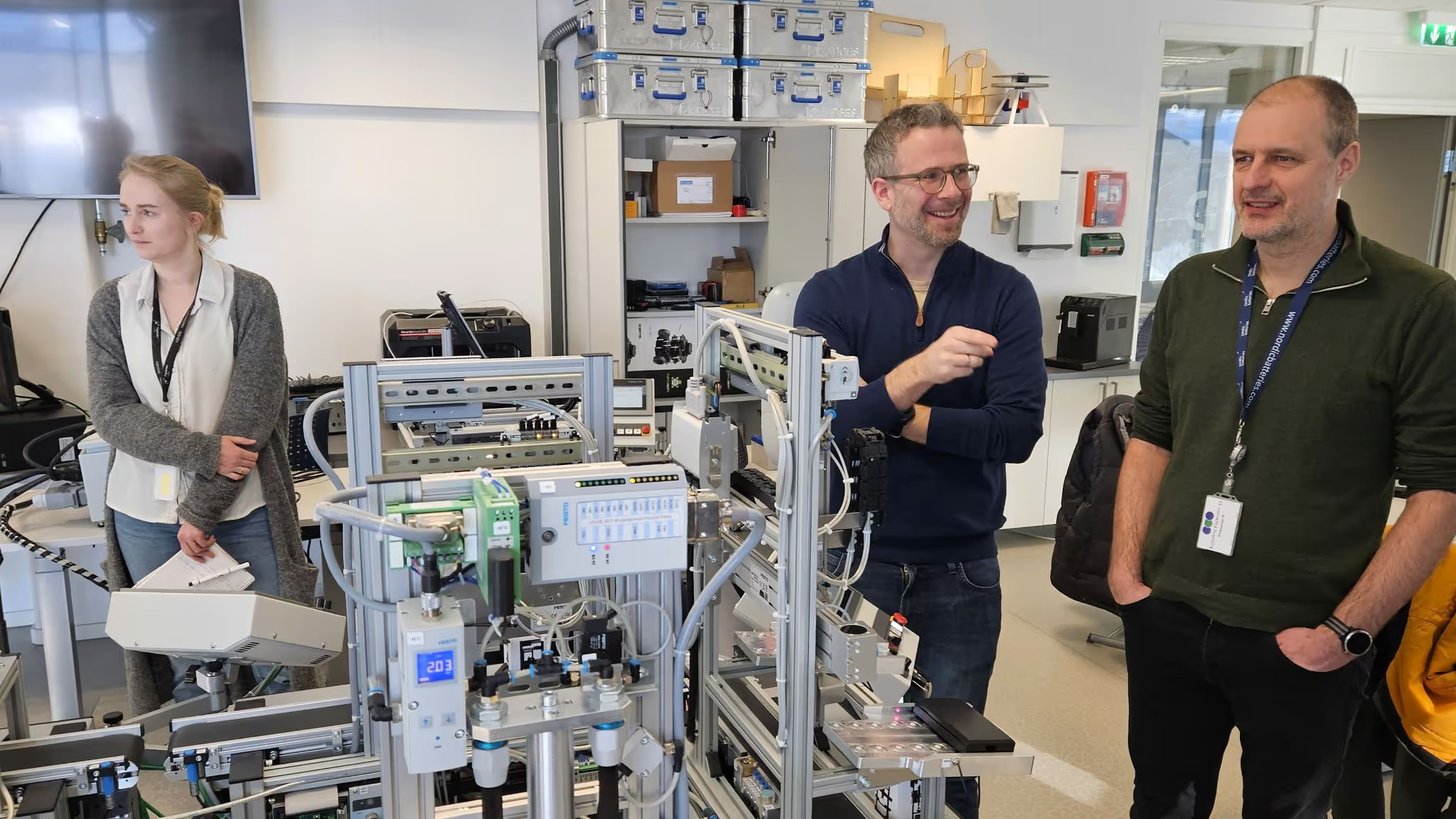
Even Sand encourages Kunnskapsbyen's member companies to utilize the new program at Viken vocational college.
Viken vocational college is launching a new study program in sustainable energy forms, specifically focused on battery technology and energy storage.
The program, developed in collaboration with Kunnskapsbyen's member companies, is specifically tailored for skilled workers and individuals with backgrounds in electrical, industrial, and technical fields. It awards 10 study points and is completed over 12 weeks, with a combination of online instruction and in-person sessions.
The new program addresses the needs of an increasingly electrified and sustainability-oriented industry. Students will gain practical and applicable expertise in areas such as battery technology, energy storage, and troubleshooting battery systems.
In-demand expertise
The industry demands people who can actually work with batteries, not just understand them in theory. This program is designed to meet that need.
"The demand for expertise in batteries and energy storage is rapidly increasing. The program provides participants with skills directly relevant to today's and tomorrow's job market," says Kunnskapsbyen's project manager, Even Sand.
Furthermore, the vocational college program in sustainable energy forms will contribute to increased expertise, innovation, and value creation in the region.
Both individuals and companies are encouraged to seize this opportunity.
Combines theory and practice
Throughout the course, participants gain insight into battery chemistry, performance and condition analysis, the use of diagnostic tools, and programming of battery management systems (BMS). Additionally, emphasis is placed on safety, HSE, and sustainable solutions such as reuse and lifespan extension of batteries.
The teaching combines theory and practice, with a strong emphasis on practical exercises and group work. To be eligible for the exam, students must participate actively and meet attendance requirements and mandatory assignments. A minimum of 80 percent attendance at sessions is required.
The course is at level 5.1 in the National Qualifications Framework – and has a clear practical and application-oriented focus, aimed at the needs of an increasingly electrified and sustainability-oriented industry.





.avif)


.avif)